

Coastal Georgia Center for Driver Safety
About the Program
The Driver Safety program will build on Savannah Technical College’s stellar driver’s education program and utilize grant funding from the Georgia Governor’s Office of Highway Safety in order to create two core additional services: distracted driver education, and alcohol-impaired driving prevention.
These services will integrate both college’s community offerings and strategic community partnerships to provide greater access, and sustainability, and improve safety for decades to come.
This grant will serve youth, young adults, and parents in Bryan, Chatham, Effingham, and Liberty counties. The program will work with individual high schools to provide programming that’s appropriate for the school’s calendar of activities and campus life.
During the 2021 grant year, the college will focus its efforts on 10th graders since they are adjusted to high school life and are more likely to be driving or obtaining a driver’s license than 9th graders. It will address the specific problems of distracted driving – particularly cell phone use and alcohol consumption while driving. Local data indicates an alarming negative trend in fatalities associated with these negative behaviors.
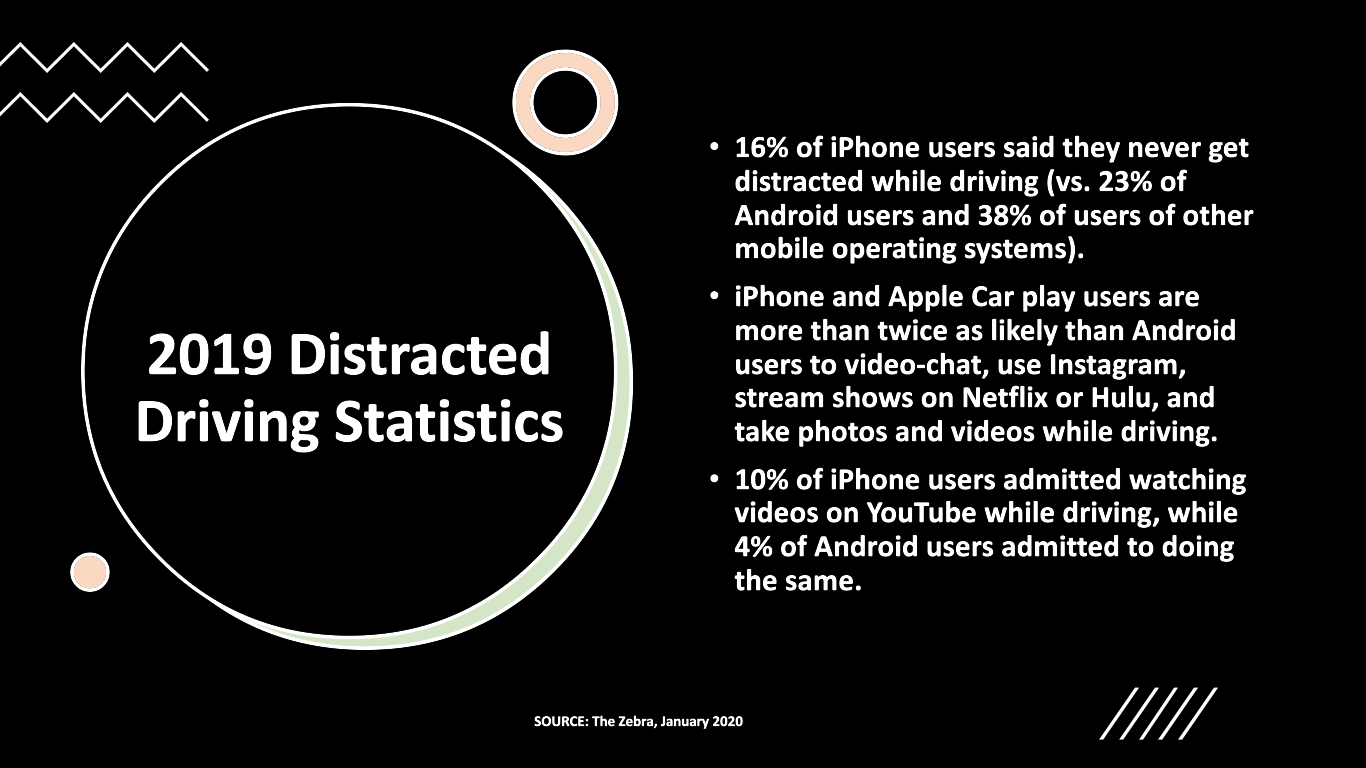
Texting and Driving Safety
What is Distracted Driving?
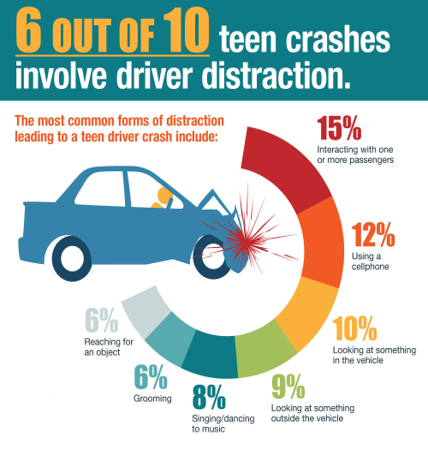
Automobiles crash for many different reasons: weather conditions, unfamiliar roads, excessive speed, inexperienced drivers, and distractions. Of these, it seems that the last two are the easiest to control but consistently cause many fatalities.
Distracted driving is particularly hazardous because taking one’s eyes and mind off the task of driving for a matter of seconds is like driving blindfolded, which can cause a speeding car to travel – essentially driverless – more than 300 feet in just seconds.
Quick Stats

Texting while driving is six times more likely to cause a car accident than drunk driving

4,637 people died in car crashes in 2018 due to cell phone use

Distracted driving costs society $40 billion a year

Distracted driving claims 9 lives per day — approximately 3,500 per year
Texting and Driving Statistics and Facts
Of the approximately 37,000 Americans who die in traffic accidents each year, almost 9 percent, or close to 3,700, are the result of distracted driving. This category of hazardous driving includes any activity that takes a driver’s mind off the road. Distracted driving is defined as operating a motor vehicle while:

Not paying attention to the road and other vehicles

Talking to passengers

Changing radio stations

Dealing with passengers

Putting on makeup

Dialing in GPS

Eating or drinking

Texting
When combined with another complicating factor, distracted driving can turn deadly very quickly. These other factors include:

Youth or inexperience
(of the driver)

Rain

Other weather, such as snow or high winds

Unfamiliar roads

Construction on the road

Driving under the influence of alcohol or drugs

Tailgating

Driving while tired
Don’t Text and Drive: Here’s Why
The National Safety Council estimates that cell phones were the distraction in 26 percent of accidents it studied in 2014, and most of those involved simply talking on the phone, not texting, which was pinned as the cause in just five percent of accidents. Those most likely to be involved in a fatal accident as a result of cell phone use while driving are in their 20s. This group represents 24 percent of drivers in fatal accidents but 35 percent of distracted driving accidents that involve cell phone use. Younger drivers ages 15-19 made up 13 percent of drivers distracted by cell phones who were involved in accidents.
Further evidence of distracted driving is the rising number of non-occupant or pedestrian and cyclist fatalities. Nearly 7,000 non-motorists were killed by drivers in 2017, including about 6,000 pedestrians and almost 800 cyclists. Millions more suffer non-fatal but debilitating injuries from auto accidents that cost billions of dollars in lost income and productivity.
One Simple Decision® Safe Driving Simulator
Coastal Georgia Center for Driver Safety will use VR Simulators from One Simple Decision® to educate teen drivers on the dangers of distracted and impaired driving during the grant year. The simulators are state-of-the-art technology that allows students to virtually experience the dangers and consequences of distracted and impaired driving through interactions with real law officers, judges, ER personnel, and doctors.
This program consists of simulation drives, first-person consequence videos, interactive quizzes, and advice from experts known as the Reality Check videos. See the video below for more information on OSD® simulators.
“The SADD program highlights prevention of all destructive behaviors and attitudes that are harmful to young people, including underage drinking, substance abuse, impaired driving, violence, and suicide. SADD’s unique approach involves young people delivering education and prevention messages to their peers through school and community-wide activities and campaigns responsive to the needs of their particular locations.”
For more information about SADD, visit the SADD Georgia website.
We would like to thank our sponsors and partners
Abbie Deloach Foundation, Jimmy Deloach, SCCPSS, Effingham, Bryan, and Liberty county schools, Parent University, SSU STEM, Upward Bound, Horizon, TIP Organization, Savannah Youth Council, and CCYC
For more information, contact us:
Atina Brantley, Director of Drivers Safety
[email protected]
Morgan Kirby, Community Coordinator – Bryan, Chatham, Effingham, & Liberty counties [email protected]
Frequently Asked Questions
Certificates of Completion will be issued once a student completes the full Drivers education program. Please allow up to two weeks to receive this by email. We strongly recommend that Driving Appointments with the DMV are not scheduled until you have your Certificate of Completion in hand. Students must remember to keep the original copy of their certificate for the Department of Driver Services and insurance purposes. There is a $10.00 fee for the re-issuing of completion certificates.
To receive a certificate of completion for the 30-hours of classroom training and 6 hours of behind the wheel training:
- All 30 hours of the class must be completed AND you must receive a grade of 70% or better.
- All 6 hours of behind-the-wheel training must be completed AND satisfactorily.
- If any part of a class or behind-the-wheel training is missed, you will be subject to fees to cover make-up day sessions if you would still like to complete the course
Yes, you can. This class is open to anyone with a learner’s permit! The scholarship is only available to 15- 17-year-olds that qualify.
Behind-the-wheel appointments are only canceled if severe weather conditions exist, such as:
- Severe thunderstorm watch or warning
- Tropical storm watch or warning
- Hurricane watch or warning
- Tornado watch or warning
Light rain or typical inclement weather does not automatically cancel driving appointments.
If you or your child do not feel comfortable driving due to weather conditions, you may choose to reschedule your appointment.
Training in less-than-perfect weather can also provide valuable experience and help build safe driving skills in real-world conditions.
To cancel an appointment, call (912) 443-3392, email [email protected], and notify your instructor.
Behind-the-Wheel Instructors
Ron Passaro — [email protected]
Melvin Price — [email protected]
Kerry Demere — [email protected]
For current weather conditions and alerts, download the WTOC Weather App.
To receive a certificate of completion for the 30-hours of classroom training and 6 hours of behind the wheel training:
- All 30 hours of the class must be completed AND you must receive a grade of 70% or better.
- All 6 hours of behind-the-wheel training must be completed AND satisfactorily.
- If any part of a class or behind-the-wheel training is missed, you will be subject to fees to cover make-up day sessions if you would still like to complete the course.
Congratulations on earning your Certificate of Completion! You’re now ready to schedule your Georgia Road Test. To learn what documents you’ll need and how to schedule your appointment, choose the option below that applies to you.
Georgia teens who are unable to complete the Alcohol and Drug Awareness Program (ADAP) through their high school may complete the program online at any time. This option is especially helpful for homeschooled students or those who were unable to attend a traditional ADAP course.
Learn more about the eADAP online program.
We’re glad you asked. It all starts when teen drivers and their parents or guardians apply for the scholarship.
Online applications are due by the 5th day of each month. Click here to apply.
Effective July 1, 2019, scholarship award and denial notifications will be sent on the first day of each month rather than the 20th of each month. Students and parents are notified by email if the application has been awarded or denied.
Students have 30 days from the date of the scholarship award to choose an authorized driver’s education provider and present their scholarship redemption code to enroll in a 30/6 driver’s education course. Students have 180 days from the date of the scholarship award to complete the 30/6 course.
If you are unable to attend another session’s meeting day, then for a fee- you can enroll in one of our available make-up dates offered every 2 months. The fee is $75 per student. Just send a note to [email protected] and we’ll provide available make-up dates.
Joshua’s Law is a bill that changes the requirements that teen drivers must meet to obtain a Class D driver’s license.
To get a Class D driver’s license at age sixteen (16):
- You must have completed a driver education course approved by the Department of Driver Services and
- You also must have completed a cumulative total of at least forty (40) hours of other supervised driving experience, including at least six (6) hours at night.
- If you have not completed an approved driver’s education course, you cannot get your Class D driver’s license until you reach age seventeen (17). Remember, forty (40) hours of driving experience, including six (6) hours of driving at night, is always required for a Class D driver’s license.
It depends on your age at the time you apply for your Class D Georgia Driver’s License.
If you are 16 years of age, you will be required to show proof that you completed a driver education course approved by the Georgia Department of Driver Services (DDS). In addition, you must have completed a total of 40 hours of supervised driving, 6 hours of which must be at night.
If you are age 17 or older, you will not be required to show proof that you completed a driver education course. However, you will still be required to have completed a total of 40 hours of supervised driving, 6 hours of which must be at night.
TADRA, the Teenage & Adult Driver Responsibility Act, is a graduate driver’s license program for young drivers ages 15 to 18.
Three-Step Process in TADRA
Step 1: Instructional Permit (Class CP License)
Step 2: Intermediate License (Class D License)
Step 3: Full License ( Class C)
Learn More About the Graduated Driver’s License Program
Visit The Georgia Department of Driver Services to view more Frequently Asked Questions.
The option to only receive behind-the-wheel lessons is no longer available. Those interested in receiving driving lessons must enroll in the whole course.
Parents are responsible for picking up students on time at the end of class/lesson.
To receive the certificate of completion, students must complete the 30 hours of classroom and the 6 hours of driving. If a session is missed, the student will need to complete the necessary makeup days to meet GDEC requirements before the certificate can be issued.
We’d be glad to help you. Send us an email at [email protected] with the subject line “Driver’s Ed Question”. Or call us at 912-443-3392. If you don’t reach us, leave us a message and we’ll get right back to you.


